
Setting Clear Expectations: A Simple Delegation Model for Busy Leaders
You ask someone to prepare a few slides for Monday's meeting. They turn up with twenty, dense with detail, when you wanted three clean takeaways. Or they turn up with three vague slides when you needed them to walk the room through the numbers. Either way, it misses, you are scrambling before the meeting, and they are wondering what they got wrong. So you rebuild it yourself the night before, which is exactly what you were trying to avoid.
Most of the time, this is not a capability problem. It is an expectations problem. The person was clear on the task. They were not clear on what good looked like, why it mattered, or when you needed it. And here is the uncomfortable bit. That gap usually starts with us.
When I coach leaders through this, one tool comes up again and again because it is quick, it is memorable, and it works. It is called the PORT model.
What is the PORT model
PORT is a delegation model, but I use it just as much for setting clear expectations. It stands for purpose, outcome, resources and time. Or, if you prefer the plain English version a client offered me recently, why, what, how and when.
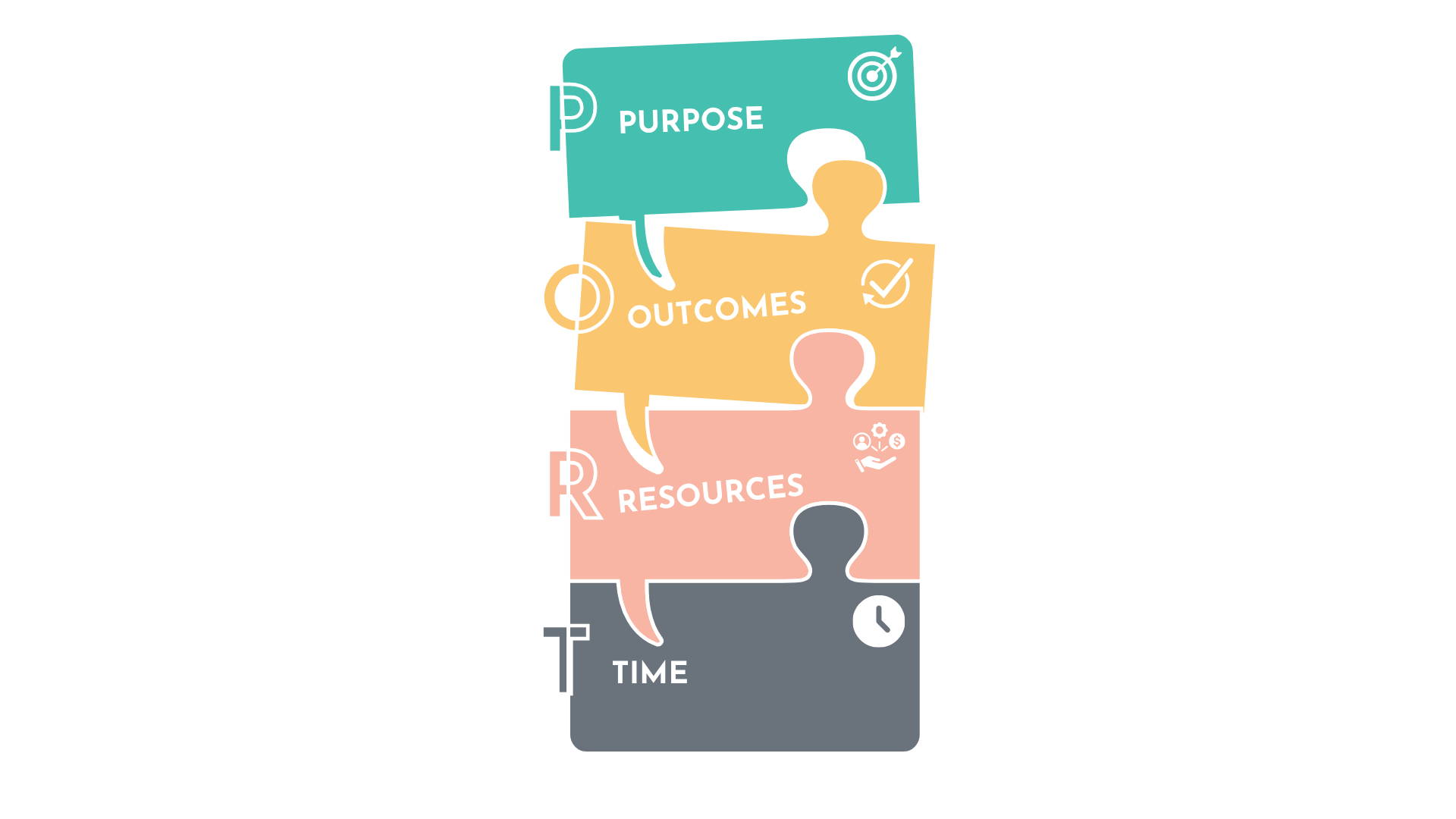
For something simple and familiar, it takes about a minute to run through before you delegate it. For a bigger piece of work, a sensitive message, or a conversation you want to get right, give yourself two. Either way, a couple of minutes of thinking on your part saves hours of rework on theirs.
Here is what each part means in practice.
Purpose is the why. This is the context. Why are we doing this, what is the impact, and why does it matter. People deliver better work when they understand the point of it, not just the instruction. When you skip the why, you get compliance at best and confusion at worst.
Outcome is the what. This is where you articulate what you are actually trying to achieve and, crucially, what good looks like. Is it a two-page summary or a ten-page report? What depth do you need? What is the measure of success? The outcome can be quantitative or qualitative, but it has to be specific. This is where the quality piece lives, and it is the part most leaders rush.
Resources is the how. What can the person draw on to get this done. It might be people, processes, systems or previous work. Sometimes you name the resource directly. Other times it is a conversation: what could you draw on here? There was a report we did last quarter, or you could speak to so-and-so. You are helping them think it through, not just handing them a task and walking away.
Time is the when. When does this need to be delivered. Simple, but so often left unsaid. And worth knowing that the timeframe shapes everything else. A tight deadline means bare bones. A longer runway allows for more depth. If you do not name the time, people guess, and they usually guess wrong.
A quick example of where this goes sideways
Picture a manager who asks a team member to "look into our onboarding process and put something together." Reasonable enough. But look at what is missing.
There is no purpose, so the team member does not know whether this is a minor tidy-up or the start of a full review. There is no outcome, so they cannot tell whether you want a one-page summary of issues or a complete redesigned process with recommendations. There are no resources, so they start from scratch instead of building on the staff survey you already have sitting in a drawer. And there is no time, so they assume it can wait, while you assumed it would land by Friday.
Each of those gaps is a place where the work can quietly drift away from what you had in your head. Run the same request through PORT first, and every one of those gaps closes before the person even starts. That is the whole point. You are not adding work, you are removing the rework.
How PORT helps you read the person in front of you
Here is something I love about this model. It does not just clarify your thinking. It helps you tailor your message to the person you are talking to.
Your people are all different, and yet we often communicate with everyone the same way and wonder why it does not land. Some of your team want every detail in the world. Others just want to know what it is so they can get on with it. PORT gives you a simple way to meet them where they are.
When someone comes back with questions or seems unsure, you can usually trace it to one of the four parts. Do they need more context? That is the purpose. Are they unsure how to approach it? That is the resources. Is the brief still fuzzy? That is the outcome. Once you know which part is missing, you know exactly where to add clarity, rather than re-explaining the whole thing.
Where PORT fits into accountability
Setting clear expectations is not a standalone skill. It sits inside something bigger, and that something is accountability.
In my work I use the Four Cs of Accountability: capability, clear expectations, check-ins and communicating outcomes. PORT lives squarely inside the second C. It is how you get clear expectations right.
But it does not work on its own, and this is where leaders often come unstuck. You can set a beautiful expectation and still watch the work go off the rails, because there were no feedback loops along the way. When we do not check in, people run a thousand miles in a direction when you only expected them to take ten steps. The check-in is where you catch that early, course correct, and give feedback while it still matters.
So think of it as a chain. Capability asks whether the person can do the work, and whether they need upskilling. Clear expectations, set well using PORT, makes sure you are both on the same page about what success looks like. Check-ins create the cadence that keeps the work on track. And communicating outcomes closes the loop, so people know what they achieved and what came of it.
Clear expectations are the foundation, but they only hold if the rest of the chain is in place.
Try it before your next delegation
The next time you hand work to someone, or you have a message to deliver, pause for a minute or two first. Jot down four things. Why are we doing this. What does good look like. What can they draw on. When do you need it.
It is a small habit, but it is the difference between work that comes back right the first time and work that comes back to you. Accountability does not start with chasing people. It starts with being clear.
So before your next delegation, give PORT a go. One conversation, four prompts, and far less rework. If it helps, share it with another leader in your team who is carrying more than they need to.
Claire Gray is a leadership facilitator, coach, and author of Thriving Leaders: Learn the Skills to Lead Confidently and Thriving Teams: When Teams Unite, Align and Achieve. She works with leaders and organisations across Australia to build cultures where people and performance thrive. You will find the full Four Cs of Accountability framework in Thriving Leaders.
PS. If you would like to learn how to set clear expectations and hold your teams accountable, join our next Thriving Leaders Program or reach out for one-on-one coaching.


